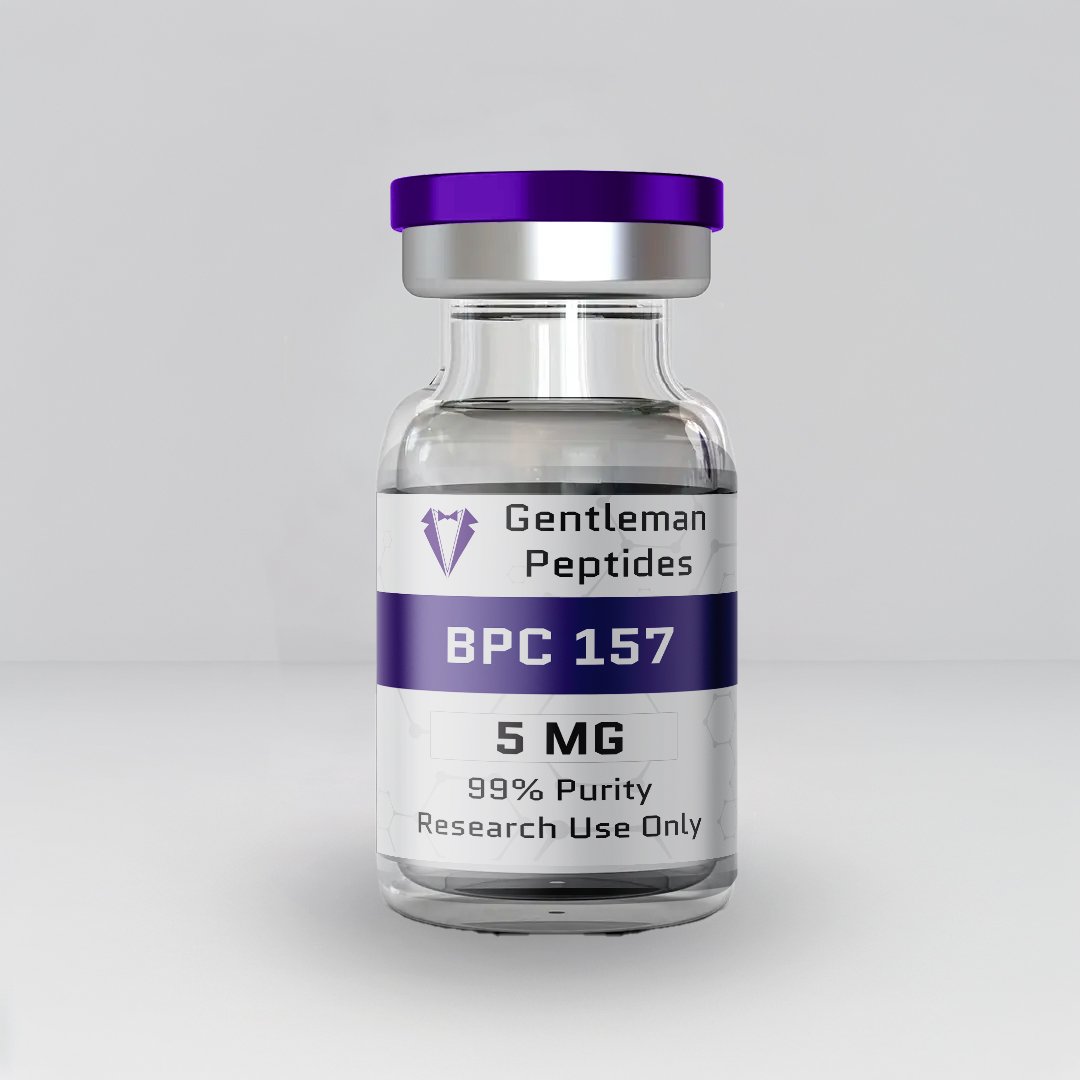
Buy BPC-157 5mg
Injectable BPC-157 — Research-Grade Pentadecapeptide (5 mg Vial)
Injectable BPC-157 (5 mg) is a synthetic pentadecapeptide offered in vial form for laboratory research and analytical studies. It is provided for strictly research use only, not for human or veterinary administration. The vial format enables precise dosing and compatibility with in vitro and in vivo protocols.
(Gentleman Peptides product page: Injectable BPC-157)
Definition & Purpose of Injectable BPC-157
Injectable BPC-157 is chemically identical to its oral counterpart but offered in a sterile vial formulation suitable for parenteral administration in research models. Researchers use it to explore tissue repair mechanisms, angiogenesis, vascular remodeling, and inflammatory modulation in controlled animal or cell studies.
Key Research Attributes — Injectable Format
-
Format: Sterile vial, 5 mg peptide
-
Intended Use: Laboratory research, not for human use
-
Purity & Testing: ≥98% HPLC/purity verified (batch COA)
-
Documentation: COA Hub and COA Guide
-
Traceability: Lot numbers matched to COA documents
-
Price Tier: Competitive vials pricing per mg on the product page
Preferred Research Applications for Injectable BPC-157
-
In vivo healing models: tendon, ligament, muscle injury, bone repair protocols
-
Angiogenesis & vascular studies: microvascular remodeling, capillary growth
-
Inflammatory models: cytokine shift, tissue edema, immunomodulation
-
Comparative models: pairing with other peptides or growth factors in combination research
Vial & Peptide Technical Data
-
Sequence: Gly-Glu-Pro-Pro-Pro-Gly-Lys-Pro-Ala-Asp-Asp-Ala-Gly-Leu-Val (15 aa)
-
Weight: ~1419.5 g/mol
-
Purity: ≥98% (HPLC verified)
-
Sterility: Produced under sterile conditions appropriate for parenteral research use
-
Container: Glass vial with stopper, nitrogen-flushed, sealed
-
Storage: Refrigerated (2–8 °C) optimal; short-term room temperature permissible
Quality Assurance & Verification
-
Third-party testing: Each vial includes a batch-linked Certificate of Analysis
-
COA verification: Access via COA Hub or COA Guide
-
Safety documentation: Refer to Peptide Safety for vendor-agnostic handling and verification practices
Injectable BPC-157 vs Oral BPC-157 vs TB-500
-
Injectable vs Oral BPC-157: Injectable form offers more precise dosing, faster systemic uptake in models, and fewer absorption variables; oral form is advantageous in GI or mucosal work but subject to first-pass or degradation effects.
-
Injectable BPC-157 vs TB-500: BPC-157 (15 aa) tends to be used in GI/tendon/ligament models; TB-500 (43 aa) is more common in muscle/cardiovascular cell migration models. Use case determines selection.
Build out full comparison pages under Compare Hub and link here to strengthen your internal knowledge graph.
Research Peptide Comparison — Injectable Context
| Peptide / Format | Primary Use Models | Molecular Weight | Delivery Mode | Advantages |
|---|---|---|---|---|
| Injectable BPC-157 | Tendon, vascular, wound, organ repair | ~1419 Da | Parenteral (IM/SC) | Precise dosing, consistent uptake |
| Oral BPC-157 | GI mucosal, systemic studies | ~1419 Da | Oral / gavage | Non-invasive route, GI targeting |
| TB-500 (injectable) | Muscle regeneration, angiogenesis | ~4963 Da | Parenteral | Strong migration/cell-movement effects |
Best Practices for Using Injectable BPC-157
-
Use sterile injection techniques (e.g., SC, IM) appropriate to your animal model
-
Document volume, concentration, route, timing, all in lab logbooks
-
Maintain vial integrity—use within recommended timeframe
-
Refer to published protocols in literature (PubMed/PMC) for dosing paradigms
FAQ — Injectable BPC-157
Q1. What research benefits does injectable BPC-157 provide over oral?
A: Parenteral delivery bypasses absorption variables and allows more predictable systemic exposure in animal models.
Q2. Is injectable BPC-157 sterile and safe for injection in models?
A: Yes, it is manufactured under sterile conditions suitable for parenteral research use (not for humans).
Q3. Do you provide COA for vials?
A: Yes. Each vial is batch-linked to a third-party Certificate of Analysis. Verify via COA Hub.
Q4. How should the vial be stored?
A: Store refrigerated (2–8 °C); avoid repeated freeze-thaw.
Q5. Is injectable BPC-157 for human use?
A: Absolutely not. It’s strictly for research use in laboratory settings only.
Q6. What’s the refund/return policy?
A: We offer a 30-day money-back guarantee for unused, unopened vials (see Returns Policy).
Last updated: October 17, 2025
Key References for Injectable BPC-157 Studies
-
Wound healing and vascular modulation — Frontiers study on BPC-157
-
Tendon / muscle regeneration in animal models — PMC article
-
Comparative peptide literature (BPC-157 vs TB-500) — PMC article
| Weight | 0.0125 lbs |
|---|---|
| Dimensions | 0.75 × 0.75 × 0.75 in |
| Quantity |
1 Vial, 3 Vials |
All products on this site are for research and development use only. Products are not for human consumption of any kind. The statements made on this website have not been evaluated by the US Food and Drug Administration. The statements and the products of this company are not intended to diagnose, treat, cure, or prevent any disease. Gentleman Peptide is a chemical supplier. Gentleman Peptide is not a compounding pharmacy or chemical compounding facility as defined under 503A of the Federal Food, Drug, and Cosmetic Act. Gentleman Peptide is not an outsourcing facility as defined under 503B of the Federal Food, Drug, and Cosmetic Act. All products are sold for research, laboratory, or analytical purposes only, and are not for human consumption. Gentleman Peptide’s Products are intended strictly for research purposes only. These products are not approved by the U.S. Food and Drug Administration (FDA) for human consumption or medical use. Under no circumstances should these peptides be used for any purpose other than research. By purchasing or using our peptides, you acknowledge and agree that you will use them solely in accordance with applicable laws and regulations and that you accept full responsibility for their use. Statements made on this website have not been evaluated by the USA Food and Drug Administration.
Related products